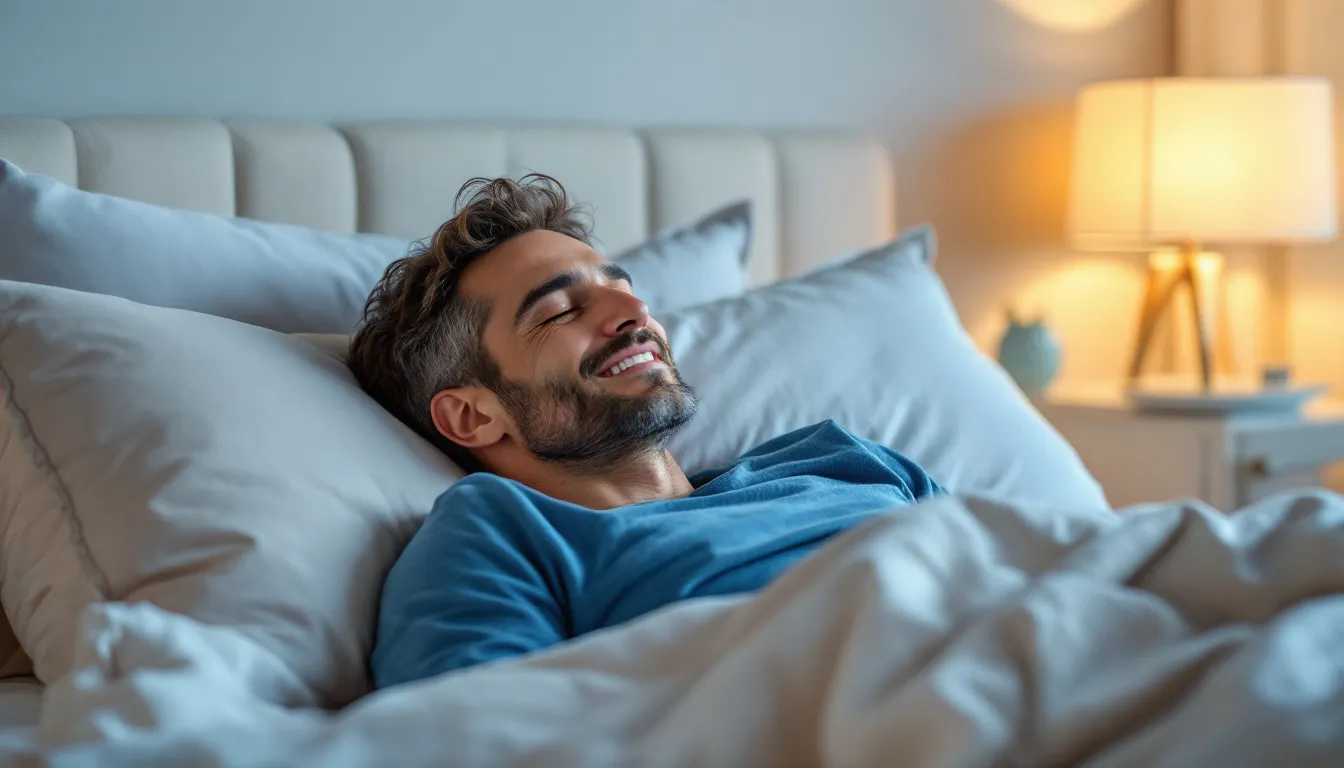
These 3 sophrology techniques transform your restless nights

Sleepless nights. They exhaust us. Sophrology for sleeping changes everything. I tested these techniques with my loved ones who could no longer close an eye. Abdominal breathing, soothing visualizations, progressive relaxation – these tools transform your restless nights into deep sleep. Ready to reclaim your nights?
Sophrology sleep exercises: effective techniques to fall asleep
I am going to share with you the most powerful sophrology sleep exercises that I use with my loved ones.
Sophrology breathing: the abdominal technique to relax
Sophrology breathing abdominal remains your best ally to prepare the body for sleep. This simple yet formidable technique instantly calms your nervous system.
Here is how I suggest you proceed. Sitting, standing, or lying down, start by exhaling completely. Then inhale through your nose by inflating your belly. Try to exhale as slowly as possible, emptying all the air from your lungs. Pull your belly in during this phase. Inhale again while holding the air for a few seconds.
The mental aspect counts as much as the technique. During inhalation, visualize that you are filling yourself with calm and well-being. On the exhale, imagine that you are evacuating all the negative elements that harm your sleep: stress, fears, apprehensions, and tensions.
Progressive sophrology relaxation and body scan
This technique consists of focusing your attention on each part of your body. You mentally scan your body from your feet to your head. The goal? Identify tension areas to consciously release them.
I encourage you to truly listen to your body. Identify precisely where the tension is located to better release it. This practice works particularly well because our body accumulates physical tensions during the day. These tensions can block access to restorative sleep if they are not released.
Sophrology sleep visualization: creating a climate of inner security
Sophrology sleep visualization techniques powerfully prepare the body and mind for rest. They consist of imagining soothing scenes or refreshing places. These images promote relaxation and create a feeling of inner security.
You can visualize a peaceful place where you feel safe. Or imagine a soft light that travels through your body and drives away tension. These positive anchoring techniques condition your mind towards a state conducive to falling asleep.
The objective becomes clear: no longer forcing or enduring your sleep difficulties. You become the master of your potentials by listening to and respecting yourself. You implement an action adapted to the need of the moment.
Guided sophrology relaxation: audio and video supports to start
Many resources exist to support you in your practice. Audio or video recordings offer sessions of guided sophrology relaxation specifically designed to encourage falling asleep.
These resources can especially help you if you are a beginner. You are guided through your exercises before practicing autonomously. The guide’s voice reassures you and keeps you focused on the technique.
How sophrology for sleeping acts on the body
Understanding the mechanisms changes everything. Sophrology for sleeping acts on several levels simultaneously to promote quality sleep. This global approach explains its remarkable effectiveness.
Mechanisms of action on the nervous and parasympathetic system
Sophrology acts mainly on the nervous system. More specifically on the parasympathetic system, thanks to working with appropriate brain waves. In practice, it helps with muscle and mental relaxation.
The different respiratory and visualization techniques gradually relax the body. They release accumulated tensions and prepare the ground for easier falling asleep. This practice offers effective tools to manage stress and anxiety.
You learn to better regulate your emotions. You reduce ruminations and worries that keep you awake at night. Stress and anxiety represent two main causes of sleep disturbance.
The concrete benefits of sophrology sleep
Regular practice of sophrology sleep brings many concrete advantages:
- Facilitating falling asleep thanks to a relaxed and soothed body
- Improvement in sleep quality and depth
- Reduction of nighttime awakenings
- Decrease in chronic insomnia
- Feeling of recovery upon waking
These benefits generally appear after a few weeks of regular practice. Consistency remains the key to success.
Sophrology and falling asleep: moving from passive to active mode
Sophrology reactivates your body’s natural functions. It acts on breathing and heartbeats. You move from a passive mode where you endure your sleep troubles to an active mode.
You become the master of your body and your sophrology and falling asleep. This mental transformation counts as much as the techniques themselves. You regain control of your nights.
Sophrology evening rituals: integrating the practice into your routine
Integration into your daily life determines your success. I help you create sophrology evening rituals that perfectly adapt to your lifestyle.
Creating a bedtime ritual with sophrology for better sleep
I recommend creating a true bedtime ritual. This ritual can include various sophrology practices such as abdominal breathing, progressive relaxation, or positive visualization.
The idea is to signal to your brain that sleep time is approaching. You thus facilitate the transition between wakefulness and sleep. Ideally, this ritual should take place in a calm environment, with dim lighting and a pleasant temperature.
Adapting sophrology sleep techniques to your needs
Each person remains different. I emphasize the importance of adapting sophrology sleep techniques to your specific needs. Some will prefer short but frequent sessions. Others will opt for longer but less regular sessions.
Listen to your body and identify the techniques that work best for you. The essential point is to practice regularly to observe lasting results on your sleep quality.
Practicing independently or consulting a sleep sophrologist
You can practice sophrology independently, at home. Many resources are available: books, apps, videos. However, for more severe or persistent sleep troubles, consulting a sleep sophrologist can be beneficial.
A sophrologist will be able to propose a personalized program. He will adapt the techniques to your specific difficulties and accompany you in your progress. He will teach you the techniques most appropriate for your situation.
Sophrology insomnia: effectiveness against sleep disorders
The results speak for themselves. Sophrology insomnia shows encouraging results in managing sleep disorders. Let’s look together at what practitioners say.
Observed results and feedback from practitioners
Many people report significant improvement in their sleep. This improvement appears after a few weeks of regular practice. This method breaks the vicious circle of insomnia to enter a virtuous circle of restorative sleep.
By better understanding sleep mechanisms, you develop a better knowledge of yourself. Sophrology allows adopting a more appropriate attitude towards nighttime difficulties. You stop fighting insomnia to cooperate with your body.
Limits and precautions for persistent sleep disorders and sophrology
I must be honest with you. Sophrology, although very effective for many people, is not a miracle solution. For severe or chronic sleep disorders sophrology, it should be part of a global approach.
This approach may include other therapies or medical follow-up. If your sleep disorders persist despite regular sophrology practice, consult a doctor. A sleep specialist can identify possible underlying causes requiring specific care.
Sophrology dynamic relaxation vs other methods for sleeping
Let’s objectively compare the different approaches. Dynamic sophrology relaxation presents unique specificities compared to other relaxation methods for sleep.
Comparative table of relaxation methods for sleep
| Technique | Principle | Strengths for sleep | Learning difficulty |
|---|---|---|---|
| Sophrology | Body-mind harmonization through breathing, relaxation, and visualization | Comprehensive action (physical and mental), adaptability, quick effects | Medium |
| Mindfulness meditation | Attention to the present moment without judgment | Reduction of ruminations, deep mental calming | High |
| Jacobson progressive relaxation | Muscle contraction then release | Effective for physical tensions, simplicity | Low |
| Cardiac coherence | Rhythmed breathing (5-6 breaths/minute) | Rapid nervous system regulation, ease of practice | Very low |
Specific strengths of sophrology for better sleep
Sophrology for better sleep stands out due to its global approach. It acts simultaneously on physical, mental, and emotional dimensions. Its strength lies in its ability to adapt to the specific needs of each individual.
It offers varied tools for different types of sleep disorders. Unlike other techniques that focus mainly on physical or mental relaxation, sophrology takes chronobiology into account. It respects the natural cycles of sleep, which makes it particularly effective for restoring quality sleep.
You now have all the keys in hand. Start tonight by choosing a technique that appeals to you. Your sleep deserves this caring attention.
Take care of yourself
Tonight, choose a technique that speaks to you. Start with 5 minutes of abdominal breathing. Your body knows how to find its natural rhythm again. It just waits for you to give it this pause. Your transformed sleep begins now.
Marie
Also read:
- All about solution-focused Ericksonian hypnosis
- Wellness workshops in Courchelettes: a moment of relaxation for you
- Tibetan bowl massage in Arras: benefits of this ancient technique
FAQ about sophrology for sleeping
Which relaxation exercises allow better sleep in sophrology?
I recommend four main techniques. Abdominal breathing remains the most accessible to start with. You can also practice dynamic relaxation techniques and the body scan. Positive visualizations perfectly complement these exercises. Don’t forget wrist self-massage, a simple technique you can do in bed.
How does sophrology act on our sleep?
Sophrology works on three levels simultaneously. It relaxes your body by releasing muscle tension. It soothes your mind by reducing anxious thoughts. Finally, it regulates your autonomic nervous system by activating the parasympathetic system, responsible for deep relaxation.
Can sophrology replace sleeping pills to treat insomnia?
For mild to moderate insomnia, yes! Sophrology constitutes an effective natural alternative. However, for severe troubles, I advise considering it as a complement. Never replace medical treatment without your healthcare professional’s advice.
How long does it take to practice sophrology to see an improvement in sleep?
You can feel the first effects from the initial sessions. But be patient! Regular practice for 3 to 4 weeks will bring lasting improvements. Consistency remains your best ally to regain restorative sleep.
Can we practice sophrology alone or should we consult a sophrologist?
Both approaches work perfectly. For mild troubles, you can start alone with adapted resources: books, apps, videos. If your troubles persist or you want personalized support, consult a certified sophrologist. He will adapt the techniques to your specific situation.