
Masculine anger revealed: hidden wounds and paths to appeasement

Behind the outbursts of an angry man lies an ocean of invisible suffering. These bursts of rage often mask childhood wounds, a sense of powerlessness, or accumulated frustrations. Anger becomes his only acceptable emotional outlet in a society that rejects male vulnerability.
What does an angry man really hide?
Anger in men conceals an ocean of invisible suffering. Behind these outbursts lie deep cracks. Have you ever wondered what really fuels this apparent rage?
The deep emotional wounds behind male anger
Angry men often carry emotional scars dating back to childhood. Rejection, abandonment, humiliation – these traumas form an explosive cocktail that resurfaces in adulthood. I regularly observe how these untreated wounds transform sadness into rage, creating a protective shell.
Society expects men to “take it without flinching.” This pressure pushes them to repress their vulnerability. A man who cries? Unthinkable for many! So anger becomes their only acceptable emotional outlet. This mask of hardness nevertheless hides a touching fragility that few dare to show.
Defense mechanisms explaining male anger
Faced with emotional pain, the man develops sophisticated avoidance strategies. Displacement of emotions is a striking example. Rather than confronting his intimidating boss, he will explode against his partner or children – less risky targets.
Denial also plays a central role in this dynamic. How many men have told you “everything is fine” while their entire body screamed the opposite? This dissociation between feeling and expression creates considerable internal pressure. Aggressiveness then becomes a shield against vulnerability. Paradoxically, this protection isolates them further, reinforcing their initial malaise.
The deep causes of anger in men
Where does this rage come from? The roots often lie in childhood. But not only that. Anger in men arises from a cocktail of experiences that shape his worldview.
Childhood traumas and past experiences
The child who grows up in an unstable home absorbs this instability as a model. An absent or violent father, an overwhelmed or critical mother – these parental figures leave their mark. I have met men whose current anger perfectly reflected their parents’ behavior.
These patterns are unconsciously reproduced in adulthood. A simple innocent remark can awaken a childhood wound and trigger a disproportionate reaction. Imagine a boy regularly humiliated for his failures. As an adult, the slightest professional criticism could provoke an apparently inexplicable outburst of anger.
Feeling of powerlessness and need for control
Nothing frustrates a man more than feeling powerless. This sensation of being trapped, with no escape, fuels a dull rage. Do you recognize this compulsive need to control everything?
Control becomes an obsession to compensate for this feeling of powerlessness:
- Controlling his professional environment
- Controlling his partner and children
- Controlling the image he projects to others
This impossible quest generates constant tension. Every unexpected event becomes a threat. Every annoyance, a personal attack. The angry man lives on a wire, ready to snap at the slightest jolt.
Accumulated frustrations, disappointments, and stress
Our society values male performance without offering space to decompress. Expectations pile up like a pressure cooker without a valve. Career, family, masculinity – the pressure never stops.
Chronic stress literally changes the brain’s chemistry. Tolerance thresholds gradually lower. An exhausted man will erupt over trifles which, when rested, would have made him smile. I often observe this escalation: small ignored frustrations, rising tension, then disproportionate explosion over an insignificant detail.
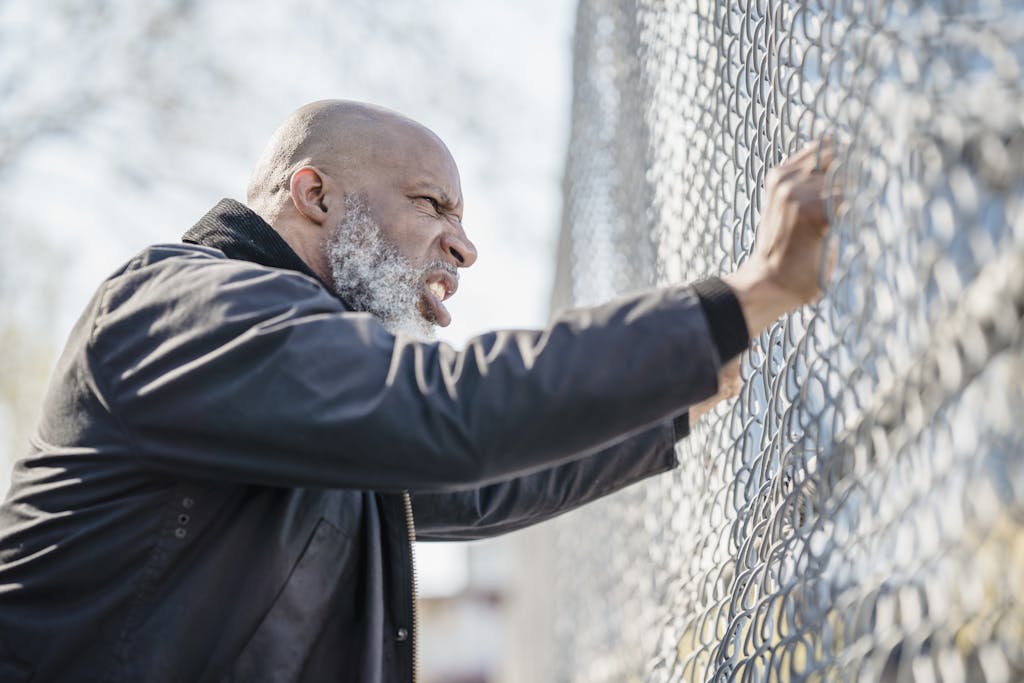
How does anger manifest in men daily?
Male anger expresses itself in a thousand ways. Some obvious, others insidious. Recognizing these signs allows intervention before the explosion.
Verbal behaviors and latent aggressiveness
Words become formidable weapons in the mouth of an angry man. Sarcasm, constant criticism, harsh tone – these verbal manifestations poison the family atmosphere. Have you noticed how some men use biting humor to mask their aggressiveness?
Silence can also express anger. This heavy muteness, punctuated by exasperated sighs and dark looks, sometimes terrifies more than outbursts. The man who refuses to communicate creates unbearable tension. His loved ones walk on eggshells, watching for the slightest sign of appeasement. This form of passive aggressiveness leaves deep marks on the self-esteem of those around him.
Impulsivity, destructive gestures and risky behaviors
Male impulsivity often translates into physical acts. Slamming a door, hitting a wall, driving dangerously – these behaviors temporarily release tension. I have known men perfectly calm in appearance who regularly destroyed objects in private.
Risky behaviors act as outlets. Alcohol, speed, extreme sports, gambling – these escapes provide temporary relief. But they also create new problems. A vicious circle sets in: stress, anger, self-destructive behavior, guilt, then back to stress. Without intervention, this cycle accelerates and worsens over time.
Also read:
- Natural treatment of post-traumatic stress: solutions that work
- Therapeutic hypnosis: your natural ally against stress and anxiety
- These 3 powerful natural anti-stress remedies change everything
Take care of yourself
Understanding what an angry man hides is the first step towards healing. Today, dare the difficult conversation or treat yourself to a meditation session. Your emotional well-being doesn’t have to wait until tomorrow to flourish.
Marie
FAQ
How to react when a man suddenly explodes with anger?
Stay calm and avoid immediate confrontation. Create temporary distance until tension decreases. Do not argue during the crisis. Wait for the person to regain composure before starting a constructive discussion. Suggest talking later when emotions have calmed.
What sign allows recognizing “hidden” anger in a man?
Revealing signs include sarcasm, apparent indifference, sharp remarks, and voluntary isolation. Passive aggressiveness manifests as relational coldness, lack of empathy, or subtle sabotage behaviors in relationships. These behaviors often mask anger that the person does not allow himself to express directly.
How long does it generally take to sustainably soothe male anger?
The necessary time varies depending on the origin of the problem and personal commitment. Generally, several months of psychotherapeutic work are needed to observe significant improvements. Embedding new emotional reflexes requires perseverance and regular follow-up.
Why do some men always deny the true origin of their anger?
This denial comes from the fear of being perceived as weak or vulnerable. Many men prefer to ignore their deep wounds to protect their self-esteem. This defense mechanism, often unconscious, establishes itself from childhood when emotional expression was discouraged or ridiculed.
When should one consult a professional for repeated anger in a man?
Consultation is necessary when anger becomes frequent, intense, or threatening to oneself or others. Seek professional help if episodes persist over time, disrupt relationships or work, or are accompanied by verbal or physical violence.