
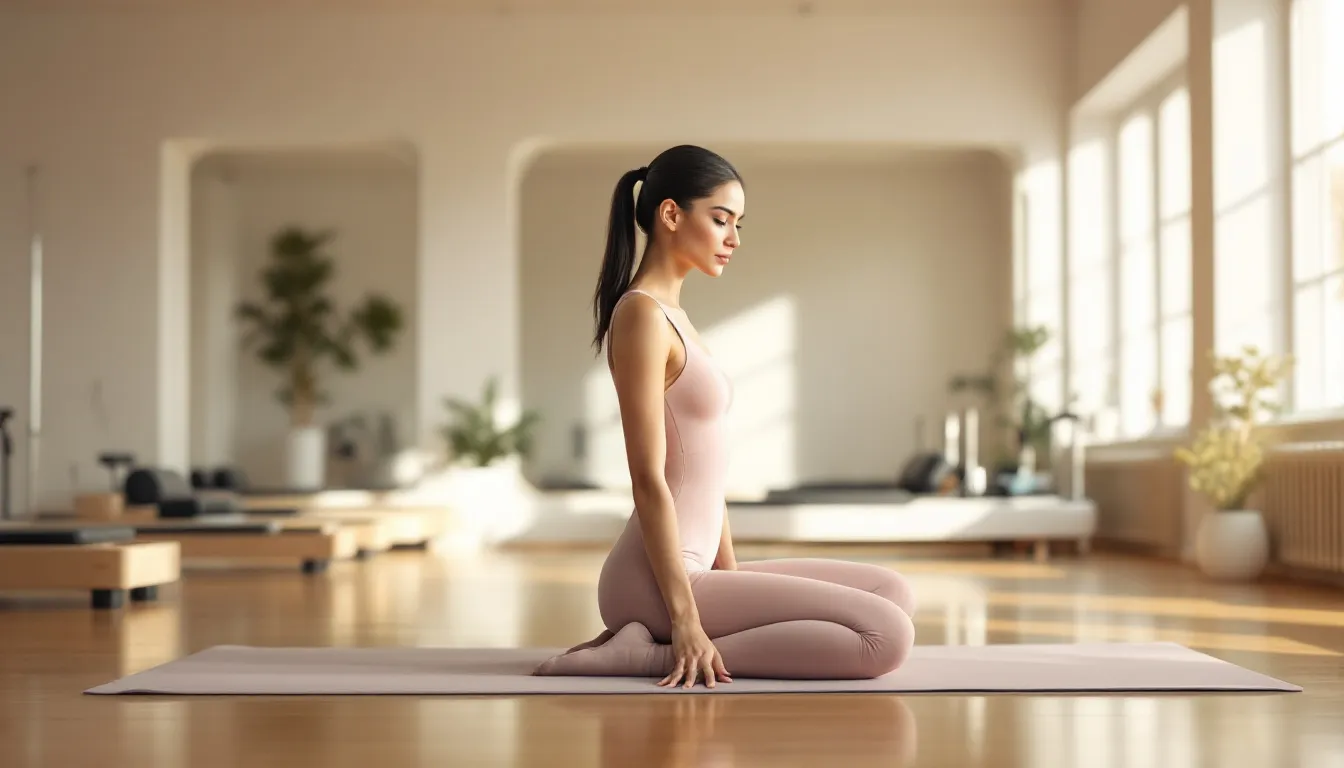
Does Pilates really make you lose weight? Your body is lying to you

Let’s be frank. Does Pilates make you lose weight? No, not directly. You only burn 200-400 calories per hour. But here’s the magic: it reshapes your figure without moving the scale. Your posture improves, your deep muscles tone up. Your body changes, differently but beautifully.
Does Pilates really make you lose weight? The full answer
This gentle discipline does not cause immediate weight loss as you might hope.
Calorie expenditure of Pilates: between 200 and 400 calories per hour
You burn between 200 and 400 calories per hour during a Pilates session. This is significantly less than running or a HIIT session. This difference is explained by the very nature of this method.
Pilates favors control and voluntary contraction. Movements are precise, measured, thoughtful. You don’t sweat as much as doing intensive cardio. Your heart rate rises moderately.
This moderate calorie expenditure is not enough to create a significant energy deficit. To lose 1 kg of fat, you have to burn about 7000 calories. With Pilates alone, that represents between 17 and 35 hours of exercise!
Pilates vs cardio: why weight loss is not immediate
Pilates focuses on deep muscle strengthening. Cardio aims for maximum energy expenditure. Two approaches, two different results.
Cardio sports demand much more energy from your body. Your metabolism ramps up during the effort and even afterward. This is called the afterburn effect.
With Pilates, this effect remains limited. Your body doesn’t continue to burn calories for hours after the session. The muscular effort is targeted but less energy-consuming.
Visible effects on the silhouette without drastic weight loss
This is what makes Pilates fascinating. You can transform your silhouette without seeing the scale number move drastically.
Your muscles tone and strengthen. Your posture improves considerably. You stand straighter, appear taller. This visual transformation can be striking.
Your clothes fit better. Your belly looks flatter thanks to the strengthening of deep abdominal muscles. Your shoulders straighten, your walk gains confidence.
How Pilates transforms your silhouette without making you lose weight
Let’s talk transformation. Pilates sculpts your body differently than other sports.
Pilates muscle strengthening: toning deep muscles
Muscle strengthening in Pilates targets muscles you usually neglect. These stabilizing muscles work constantly to maintain your balance and posture.
Your abdominal belt strengthens deeply. I’m not just talking about the visible “six-pack”. The transverse muscles, deep obliques, pelvic floor – all this internal musculature develops.
This toning creates a natural girdle around your trunk. Your waist visually shrinks. Your belly appears firmer without having lost a gram of fat.
Postural work also engages back muscles. Your lumbar, rhomboids, para-vertebral muscles progressively strengthen. This balanced musculature straightens your silhouette.
Impact of Pilates on basal metabolism
Here is an often overlooked aspect of Pilates. This discipline subtly but durably influences your basal metabolism.
Every extra gram of muscle increases your resting energy expenditure. Muscles consume more energy than fat, even when you sleep. This difference may seem minimal, but it adds up day by day.
Pilates also improves your blood and lymphatic circulation. Better oxygenation of tissues promotes cellular exchanges. Your body functions more efficiently.
The deep breathing practiced in Pilates activates your parasympathetic nervous system. This activation favors digestion and reduces stress. A less stressed body stores less fat, especially in the abdominal area.
Pilates posture: a taller silhouette without losing weight
Posture radically transforms your appearance. A person standing upright immediately looks slimmer and more confident.
Pilates corrects modern postural imbalances. Do you spend hours sitting in front of a screen? Your shoulders hunch, your head leans forward, your back rounds. This posture compresses your silhouette.
Pilates exercises rebalance these tensions. Your shoulders find their natural place. Your spine lengthens. You literally gain height.
This improvement in posture also changes your walk. You walk with more assurance. Your head carriage changes. These subtle modifications transform your presence.
Integrating Pilates into an effective weight loss strategy
Do you really want to lose weight? Pilates alone won’t be enough. But when integrated smartly, it becomes a valuable ally.
Optimal frequency: how many Pilates sessions to see results
I recommend 2 to 3 Pilates sessions per week to observe changes. Regularity counts more than intensity. Better 30 minutes twice a week than a 2-hour session monthly.
The first results on your posture appear after 4 to 6 weeks. Your proprioception improves quickly. You feel your body better in space.
Visible transformation of your silhouette requires more patience. Count 8 to 12 weeks of regular practice. Your deep musculature needs time to develop harmoniously.
If you are a beginner, start with 45-minute sessions. Gradually increase duration according to your level. The important thing is to maintain the quality of movements.
Combine Pilates and cardio to burn calories effectively
Here is my favorite strategy to burn calories: combine Pilates and cardio. This combination takes advantage of the benefits of each method.
Schedule 2 Pilates sessions and 2 to 3 cardio sessions per week. Cardio can be running, cycling, swimming or HIIT. Choose an activity you enjoy.
HIIT matches particularly well with Pilates. 15 to 20 minutes of interval training is enough. The afterburn effect prolongs calorie expenditure for hours.
Alternate Pilates and cardio days. This alternation allows optimal recovery. Your deep muscles worked in Pilates recover during cardio sessions, and vice versa.
The importance of nutrition with Pilates to refine your silhouette
Nutrition remains the determining factor to refine your silhouette. Pilates sculpts, but it is your plate that reveals these sculptures.
Favor proteins to support muscle development. Your body needs these nutrients to repair and build muscle fibers stressed during Pilates.
Complex carbohydrates give you the energy necessary to maintain the quality of your movements. Avoid fast sugars that disrupt your blood sugar and promote storage.
Hydrate sufficiently. The deep breathing of Pilates increases your water needs. Good hydration also improves the elasticity of your tissues.
Mat Pilates vs Machine Pilates: which makes you lose more weight?
Which version of Pilates to choose for your slimming goals? Each approach has its specifics.
Mat Pilates: advantages and limits for weight loss
Mat Pilates mainly uses your body weight. This approach remarkably develops your proprioception and motor control.
You learn to master each movement precisely. This body awareness improves your posture daily. The effect extends well beyond your sessions.
This method remains financially accessible. A simple mat is enough to start. You can practice at home or in group classes. Weight loss is not the primary objective, but postural transformation compensates.
The limits? Calorie expenditure remains moderate. Without external resistance, muscular intensity quickly plateaus. For marked slimming goals, this approach shows its limits.
Machine Pilates: better calorie expenditure with the Reformer
Machine Pilates changes the game. The Reformer, Cadillac or Wunda Chair add variable resistance that intensifies the effort.
This superior calorie expenditure brings Pilates closer to more energy-demanding activities. Springs and pulleys allow simultaneous work of several muscle groups.
The Reformer offers infinite progression. You increase resistance as you improve. This scalability maintains intensity and results.
Movements become more dynamic. Your heart rate rises more. The effect approaches traditional resistance training while keeping Pilates precision.
How to choose according to your slimming goals
Your slimming goals determine your choice. Want to lose weight quickly? Go for machine Pilates complemented by cardio.
Prefer a gentle and durable transformation? Mat Pilates may suffice, combined with a balanced diet. This approach suits beginners perfectly.
Your budget also influences this decision. Machine classes generally cost between 25 and 40 euros per session. Mat Pilates remains more affordable.
My advice? Start with Mat Pilates to master the basics. Then progress to machines when you feel comfortable with the basic movements.
Pilates results: testimonials and expert advice
Pilates results vary from person to person. Let me share what I observe as a practitioner.
What professionals say about Pilates and slimming
Wellness professionals agree on one point: Pilates and slimming form an effective duo in a holistic approach. Juliette, specialized fitness coach, explains: “By moving more and building muscle, you increase your energy expenditure.”
I like this holistic vision. Pilates does not make you lose weight directly, but it prepares your body to better respond to other stimuli. Your improved posture facilitates other physical activities.
Physiotherapists often recommend Pilates for its postural benefits. A healthy back allows you to practice other more intensive sports without injury risk.
Nutritionists appreciate the anti-stress aspect of Pilates. A relaxed body better manages hormones related to fat storage. This synergy indirectly promotes weight loss.
How long to see a silhouette transformation
The silhouette transformation follows a predictable timeline. Your posture improves from the first sessions. You feel straighter, more grounded.
After 4 weeks of regular practice, your loved ones notice changes. Your head carriage, your walk, the way you hold yourself – all evolve subtly.
Visible bodily changes appear around week 8. Your belly looks firmer. Your shoulders naturally straighten. Your clothes fall differently.
Profound transformation takes 3 to 6 months. Your internal musculature completely restructures. This period may seem long, but results last.
Measuring progress: beyond the scale
Forget the scale! Measuring progress in Pilates requires other more revealing indicators.
Take your measurements monthly. Waist, hips, arms – these measures better reflect your transformations than your overall weight.
Photograph yourself in the same outfit, same position, same lighting. These photos reveal postural changes invisible daily. The evolution may surprise you.
Note your bodily sensations. Do you sleep better? Do you have less back pain? Do you feel more energetic? These improvements are worth all the lost kilos.
Test your strength and endurance. Can you hold plank longer? Are your abdominal muscles more enduring? This functional progression counts a lot.
Start today to observe your body differently. Pilates will teach you to listen to it, respect it and transform it gently.
Take care of yourself
Your body deserves better than a race to lost kilos. Pilates offers you a profound and lasting transformation. Start with a session this week. Observe your sensations rather than your scale. Your silhouette will thank you in a few months.
Marie
Also read:
- Hypnosis for weight loss: eating disorders and virtual ring
- Energetic slimming in Arras: lose weight naturally through energetic balance
- Zen bioenergetic massages in Arras: benefits and specialized institutes
FAQ
Does Pilates make you lose belly fat?
Pilates strengthens the deep muscles of your abdominal belt. It’s excellent for toning this area. But I must be honest with you: targeting fat loss in one area is impossible. Your body decides where it draws its reserves. To lose abdominal fat, you must create an overall calorie deficit. Combine a balanced diet with regular physical activity.
Does Pilates build muscle?
Absolutely! Pilates builds your body intelligently. It particularly targets deep muscles you often neglect. Your core strengthens: abdominals, lower back, pelvic floor. But not only. Your arms, legs, and back also work. You develop harmonious and functional musculature. Without excessive volume. Just strength and tone.
Is Pilates good for your back?
I can affirm without hesitation: yes! Pilates works wonders for your back. It strengthens the deep muscles that support your spine. Your posture naturally improves. Many physiotherapists recommend Pilates as a therapeutic complement. If you suffer from chronic back pain, this method can really relieve you.
How many Pilates sessions to see effects?
Practice 2 to 3 sessions per week. The first effects on your posture appear after 4 to 6 weeks. You will feel more toned. More visible results on your silhouette? Count 8 to 12 weeks of consistent practice. Keep this in mind: regularity counts more than intensity. Better two short sessions than one long occasional session.
Does machine Pilates make you lose more weight than mat Pilates?
Machine Pilates indeed burns more calories. The Reformer, Cadillac and other equipment use variable resistance. Intensity is higher. Your energy expenditure increases. But if you are a beginner, I advise you to start on the mat. Master the fundamentals first. Then progress to machines. The ideal? Alternate the two methods to benefit from all their advantages.


