

Foot reflexology: your natural ally for optimal health

Your feet tell your health story. Foot reflexology is this ancient technique that considers your feet as a detailed map of your body. By stimulating precise points, it releases your tensions, improves your circulation, and awakens your self-healing abilities. Much more than just a massage, it is a complete reset for your system.
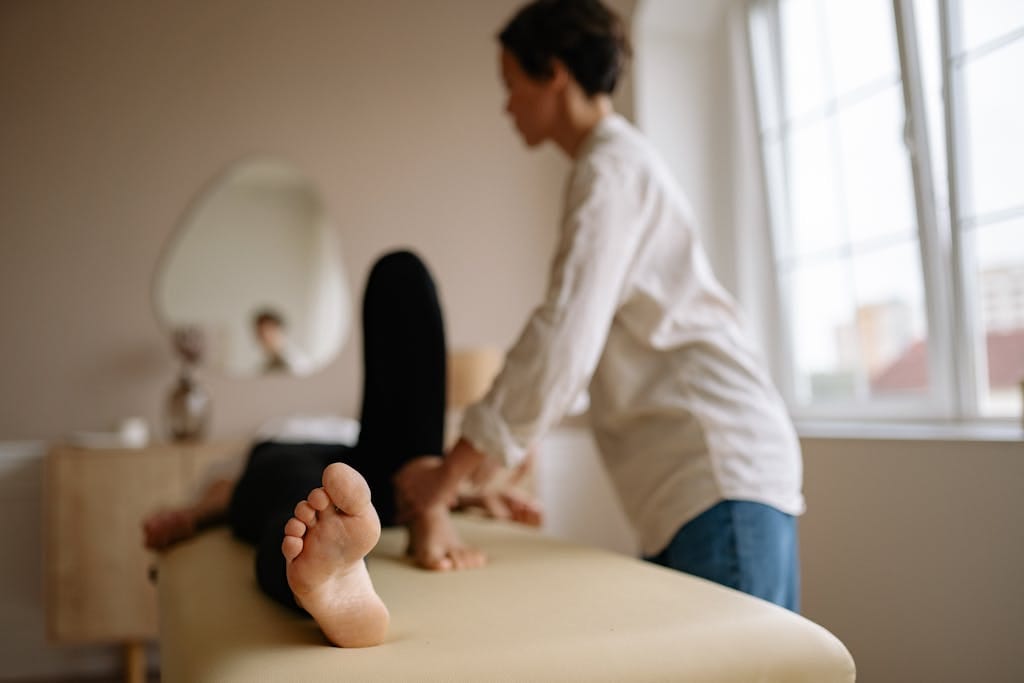
What is foot reflexology?
Foot reflexology is an ancient technique. It is based on a simple principle: your feet reflect your entire body.
I discovered this practice a few years ago and remain fascinated by its effectiveness. Imagine your foot as a detailed map of your organism. Each area corresponds to a specific organ or part. By stimulating these precise points, energy is unlocked and self-healing promoted.
You may have already noticed that massaging your feet after a long day brings immediate relief? This is no coincidence! Foot reflexology goes far beyond a simple relaxing massage. It works deeply on your overall balance.
The origins of foot reflexology
Where does this fascinating practice come from? The oldest traces date back to ancient Egypt.
A fresco from 2330 BC shows scenes of foot massages. The Egyptians had understood the link between certain points on the foot and overall health. Incredible, isn’t it?
In China as well, traditional medicine integrated similar techniques for more than 5000 years. Chinese practitioners worked on energy meridians crossing the body, including the feet.
But it was at the beginning of the 20th century that modern foot reflexology took shape. Dr. William Fitzgerald developed the “zone therapy,” dividing the body into ten vertical zones. Then Eunice Ingham refined this approach by creating the first precise foot maps that we still use today.
How does foot reflexology work?
The magic works through stimulation of reflex points. Your feet contain thousands of nerve endings.
When I practice foot reflexology, I apply pressure on specific zones. These pressures trigger chain reactions in your body. They release energetic blockages and stimulate circulation.
Your body is intelligent. It naturally seeks balance. Reflexology simply helps it find its way back to harmony. It activates your self-healing mechanisms often hindered by daily stress.
The reflex zones of the foot
Each part of your foot corresponds to a precise area of your body. It’s like a miniature map.
The toes represent your head and neck. The pad beneath the toes corresponds to your lungs and chest. The arch of the foot reflects your digestive organs. The heel is linked to your pelvis and reproductive system.
I love showing this map to my friends. Their reaction is always the same: “How is that possible?” Yet, the correspondences are surprisingly precise. When you have a headache, massaging the toes often brings quick relief.
This precision makes foot reflexology an interesting diagnostic tool. An experienced practitioner can detect tensions or imbalances even before obvious symptoms appear.
The course of a typical session
Wondering how a session goes? Let me guide you through this relaxing experience.
First, you get comfortable, usually lying down or semi-reclined. Only your feet are uncovered. I start with a light massage to relax the area and prepare the tissues.
Then I examine your feet. Their appearance, temperature, and texture already give me valuable information. I then use my thumbs and fingers to apply precise pressures on reflex points.
The session lasts about an hour. Some points can be sensitive, a sign of imbalance in the corresponding zone. But the sensation usually remains pleasant. Many of my friends fall asleep during the treatment!
After the session, drink plenty of water. Your body needs to eliminate released toxins. You might feel slight fatigue or unusual emotions. That’s normal; your organism is rebalancing.
The benefits of foot reflexology
The effects are often immediate. A deep relaxation sets in from the first session.
I have seen people arrive stressed and leave completely soothed. Foot reflexology acts like a “reset” button for your nervous system. It reduces the production of stress hormones and promotes those of well-being.
But the benefits go far beyond relaxation. This practice improves your blood and lymphatic circulation. It boosts your immune system and facilitates toxin elimination.
Do you sleep poorly? Reflexology can help. Digestive problems? It regulates transit. Chronic pain? It reduces muscular tensions and naturally soothes.
For whom and how often?
Reflexology adapts to everyone. Are you stressed, tired, or seeking better well-being?
This practice suits almost everyone. From children to the elderly, everyone can benefit. I have even seen babies calm instantly thanks to gentle pressures on their little feet!
For regular maintenance, a monthly session usually suffices. In times of stress or to treat a specific problem, a weekly rhythm for a few weeks yields better results.
Here are some situations where foot reflexology proves particularly effective:
- Chronic stress and anxiety
- Sleep disorders
- Digestive problems (constipation, bloating)
- Menstrual pain
- Headaches and migraines
- Lower back pain and muscular tensions
However, be careful, this approach does not replace medical treatment. It acts as a complement to support your body in its healing process.
Contraindications and precautions
Caution in certain situations. Your health comes first.
Foot reflexology remains a gentle technique, but some contraindications exist. In case of phlebitis, thrombosis or foot infection, it is better to abstain. Pregnant women should mention their pregnancy to the practitioner, as some points could stimulate the uterus.
If you suffer from a serious illness or are on heavy medication, consult your doctor before beginning sessions. Reflexology may interact with some medicines by altering their absorption.
I always emphasize to my friends: communicate clearly with your practitioner. Share your medical history and report any discomfort during the session. A good reflexologist will always adapt their approach to your personal situation.
How to practice foot reflexology at home?
Good news! You can easily get started with this practice. A few simple gestures are enough.
Get comfortable in a quiet place. Take one foot in your hands and start with a general massage to relax it. Use your thumbs to apply circular pressures over the entire plantar surface.
To target a specific area, refer to a reflexology chart. These diagrams are easily found online. Focus on the points corresponding to your current needs.
Feel free to use diluted essential oils to facilitate the massage. Peppermint refreshes tired feet, while lavender offers additional relaxation.
Useful tools and accessories
Some simple accessories can enrich your practice. They make self-massage more effective.
The reflexology roller is my favorite. This small spiked cylinder stimulates the whole foot in a few minutes. Roll it under your foot arch while watching TV!
Reflexology mats reproduce different textures and reliefs. By walking on them a few minutes a day, you stimulate all your reflex points simultaneously.
Reflexology balls allow precise work. Place them under your foot and apply gentle pressure. Move them to target different zones.
A simple tennis ball also does the trick! Place it under your foot and roll it slowly. It’s economical and surprisingly effective in relieving tensions.
Finally, don’t forget the importance of good hydration. After each self-massage, apply a nourishing cream. Your feet will thank you!
Take care of yourself
Your feet speak to you, listen! Treat yourself to a foot reflexology session this week. Your body deserves this regenerating break. Start with 10 minutes of self-massage tonight. Your well-being can’t wait until tomorrow.
Amanda
Also read:
- What is Thai foot reflexology?
- Wellness massage with essential oils: complete guide for optimal relaxation
- Thai massage: do you know its history and benefits?


