The best yoga techniques against anxiety

Restless mind? I tested three yoga techniques against anxiety that truly transform. Yin yoga deeply relaxes the tissues, yoga nidra instantly calms the mind, while hatha yoga balances body and mind. These practices activate your parasympathetic system and reduce cortisol. Breathe, let go.
What are the best yoga techniques against anxiety?
Stressed? Yoga offers natural solutions. I tested the most effective techniques against anxiety for you.
Yin yoga for deep relaxation
Yin yoga is my favorite anti-stress discovery. This gentle practice invites you to hold postures for 3 to 5 minutes. You deeply stretch your tissues and release accumulated tensions.
I love how this approach combines stretching and meditation. Your breathing becomes your anchor while your body relaxes. You literally feel anxiety evaporate with each exhalation. Yoga against anxiety finds in yin a particularly soothing expression for the restless mind.
Yoga nidra to calm the mind
Do you know this extraordinary “sleep yoga”? Yoga nidra guides you toward a sleep-like state while remaining conscious.
I practice this technique when my mind spins in loops. Lying comfortably, I let myself be carried by guided visualizations. My body surrenders while my mind clears. This form of yoga against anxiety particularly helps people suffering from insomnia or mental rumination. A 20-minute session sometimes equals two hours of sleep!
Hatha yoga to balance body and mind
Simple and accessible. Hatha yoga represents the ideal gateway into the anti-stress yoga universe.
This traditional practice combines postures (asanas) and breathing exercises (pranayama). I appreciate its balanced approach that strengthens the body while soothing the mind. You flow through movements at your own pace, without pressure or competition. Hatha yoga develops your concentration and reconnects you to the present moment – a perfect antidote to anxiety.
How does yoga affect anxiety?
Science confirms what yogis have known for millennia. Your body changes when you practice regularly.
Activation of the parasympathetic nervous system
Do you know that calm feeling after a session? It’s no accident.
Yoga activates your parasympathetic nervous system, responsible for relaxation and recovery. This activation counterbalances the “fight or flight” response that runs wild during anxiety attacks. I noticed that my breathing naturally slows down during my practice. My heart beats slower. My muscles relax. Yoga against anxiety acts like a switch that turns off the state of constant alertness.
Reduction in cortisol levels
Chronic stress floods your body with cortisol. This hormone slowly exhausts you.
Recent research shows that yoga significantly reduces cortisol levels. I observed these effects on myself: less muscle tension, better sleep, clearer thoughts. Regular practice of therapeutic yoga positively influences your internal chemistry. It reduces physical symptoms of anxiety such as palpitations, sweating, or nausea.
Which yoga postures are the most soothing?
Some postures calm instantly. I call them my “emergency anti-anxiety solutions.”
Balasana – Child’s Pose
Simple and comforting. The Child’s Pose brings you back to essentials.
To perform it, kneel and sit on your heels. Lean forward until your forehead touches the floor. Your arms extend in front of you or along your body. This position creates an immediate sense of security. I find refuge here when anxiety rises. It gently stretches the lower back and opens the hips. For more comfort, slide a cushion under your forehead or between your buttocks and heels.
Savasana – Corpse Pose
Don’t be fooled by its gloomy name! This final posture offers deep relaxation.
Lie on your back, arms slightly apart, palms facing up. Let your feet fall naturally to the sides. This simple position allows complete relaxation. Your body surrenders to the floor while your mind observes without judgment. To amplify the benefits of this yoga posture against anxiety, I often add these visualizations:
- Imagine a golden light gradually invading every part of your body
- Visualize tensions evaporating like smoke with each exhale
- Picture yourself in a calming place (beach, forest, mountain)
Which breathing exercises help reduce anxiety?
Breathing transforms your mental state in minutes. These techniques form the heart of anti-stress yoga.
Alternate nostril breathing (Nadi Shodana)
This powerful technique balances energies. It instantly calms a restless mind.
To practice Nadi Shodana, sit comfortably. Close your right nostril with your right thumb and inhale through the left. Then close the left with your ring finger, open the right, and exhale. Continue alternating nostrils. I use this breathing before stressful situations. It clarifies the mind and soothes the nervous system in just a few cycles.
Ujjayi breathing to soothe the mind
Do you know the oceanic sound so characteristic of yoga? It’s Ujjayi breathing.
To practice it, inhale and exhale through your nose while slightly contracting your throat. You create a soft, steady sound resembling waves. This yoga breathing generates a soothing internal warmth. It anchors your attention in the present moment. I use it daily to manage my anxiety. It regulates my heart rate and improves my concentration.
How to integrate yoga into your anti-stress routine?
Consistency beats intensity. Five minutes daily is better than one hour weekly.
Create an environment conducive to relaxation
Your space directly influences your practice. Make it inviting and personal.
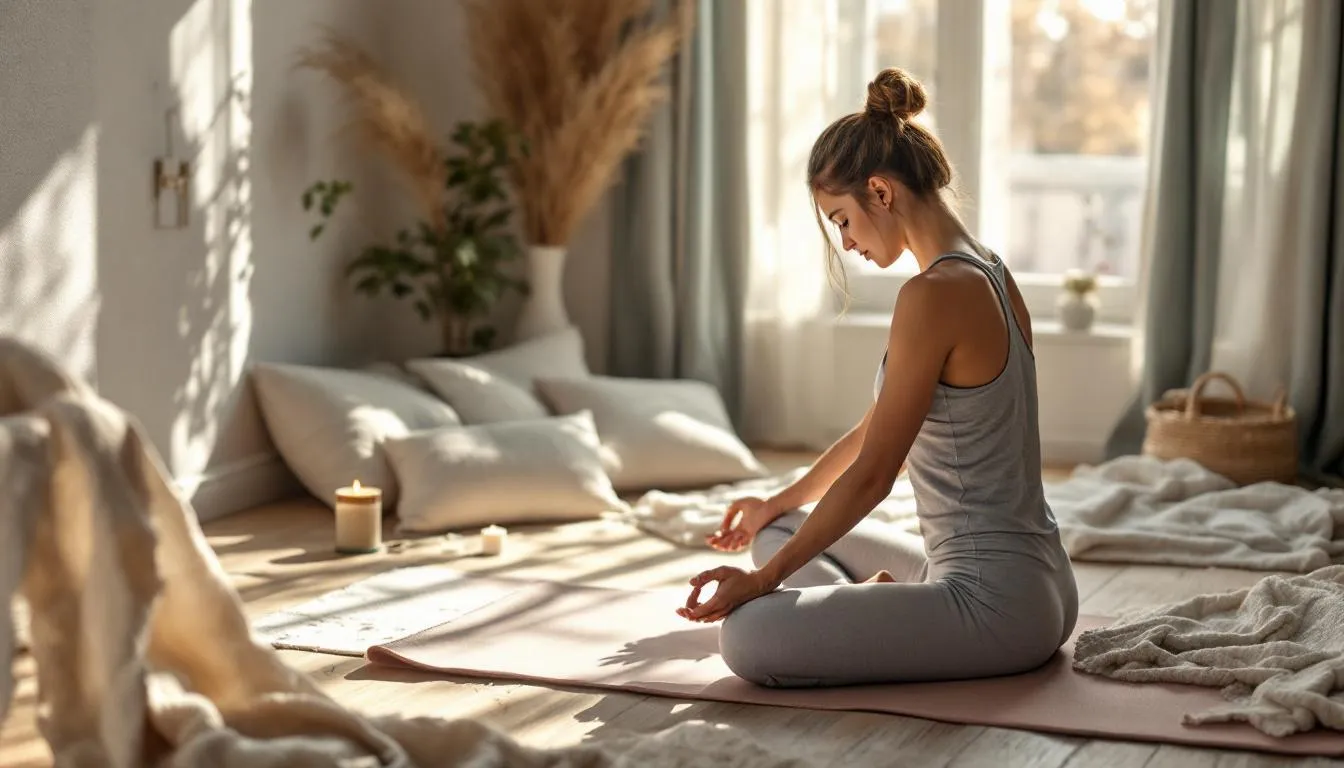
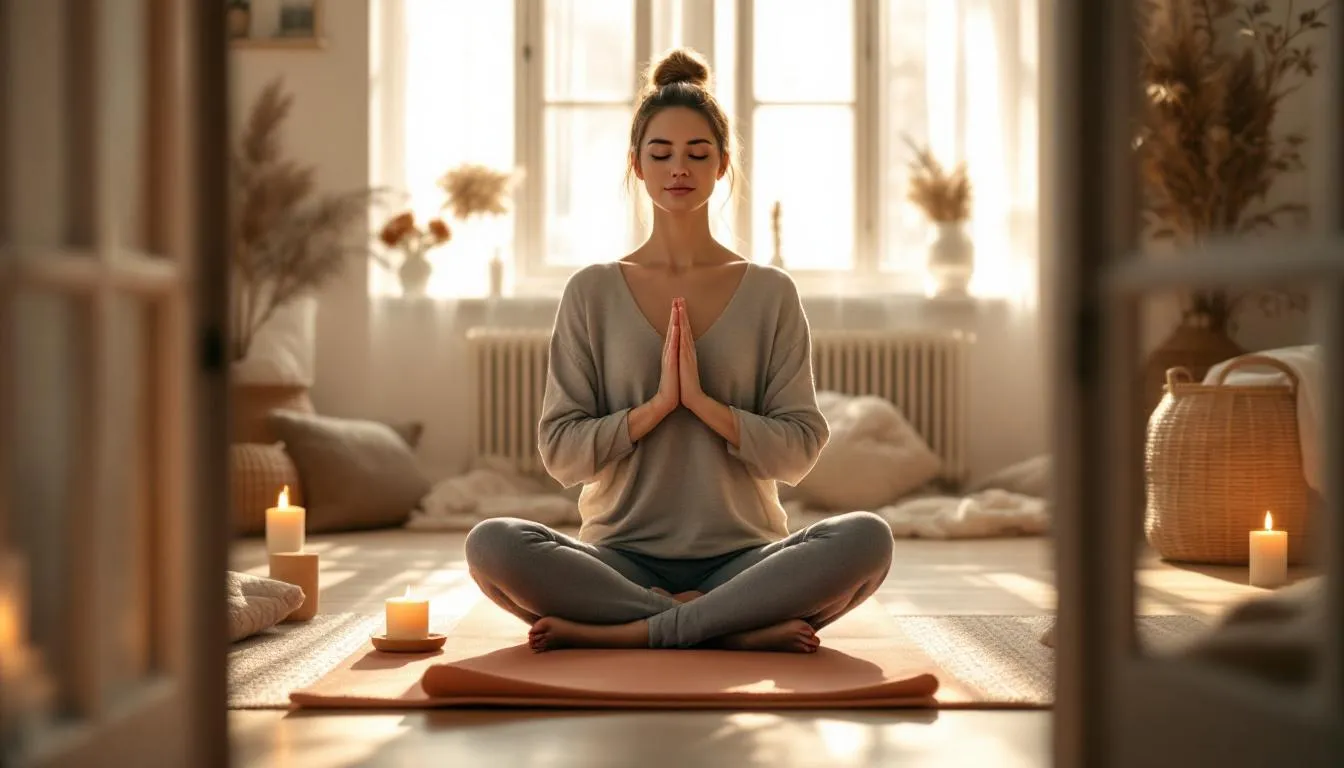
I set up a corner dedicated to yoga at home with a few simple elements. A scented candle, a comfortable mat, a soft blanket. Choose a quiet place, away from electronic distractions. Natural light is ideal, but a dim lamp also works perfectly. Add soft music if it helps you focus. This environment quickly becomes associated with relaxation in your brain.
Use accessories to improve comfort
Accessories are not a luxury. They make your practice more accessible and enjoyable.
Don’t hesitate to equip yourself with cork or foam blocks, straps, or cushions. These tools adapt postures to your morphology and flexibility. I regularly use a bolster (yoga cushion) under my knees in corpse pose. It relieves my back and deepens my relaxation. A meditation cushion greatly improves your comfort during breathing sessions. Yoga against anxiety becomes more effective when you practice without discomfort.
Take care of yourself
Anxiety does not define who you are. Starting tomorrow, offer yourself 5 minutes of yoga against anxiety. One posture, one breath. That’s all. Your body will thank you. Begin now this journey toward inner peace.
Amanda
Also read:
- Mindfulness meditation exercises: practical guide for beginners
- Indian Ayurvedic massage: free your body from accumulated stress
- Tibetan bowl massage in Arras: benefits of this ancient technique
FAQ
Is yoga effective for all types of anxiety?
Yoga brings benefits for various forms of anxiety but does not replace specific medical treatment. Consult a healthcare professional before starting regular practice, especially in cases of severe anxiety. Yoga works as a therapeutic complement by reducing physical and mental symptoms of anxiety.
How much time per day should you practice yoga against anxiety?
A daily practice of 15 to 30 minutes is enough to feel the positive effects of yoga on anxiety. Regularity matters more than duration or session intensity. Even a few minutes of conscious breathing can provide immediate relief during intense stress moments.
Can you practice yoga alone against anxiety?
Yes, autonomous practice is possible, but first take some classes with a qualified teacher to correctly learn postures and breathing techniques. Online resources and apps can then guide you. Start with simple sequences before progressing to more advanced practices.
Why is it not recommended to practice after eating?
Practicing yoga immediately after a meal disrupts digestion and causes discomfort in some postures. Wait at least 1 to 2 hours after eating before starting a session. Twists, forward bends, and inversions particularly compress digestive organs and can cause discomfort.
What is the best time of day to practice?
There is no universal ideal time to practice yoga. Some people prefer the morning to start the day serenely, others the evening to relax before bedtime. Choose the schedule that naturally fits into your routine and meets your specific needs.